
Relationships and Crises in Schools – Part 2

What is a good brain-based model for understanding triggers and drivers for behaviour? I use this useful rule of thumb called the SCARF Model very, very often. It’s an evidence-based model from author David Rock which describes influences on human behaviour. It describes how certain domains of social interaction influence how the brain is activated […]
Relationships and Crises in Schools – Part 1

An interview about Behaviour in Schools.Firstly, in your opinion what is the core principle that should drive a school’s overall approach to behaviour? The first thing we should talk about is an idea called the social contract. It’s a concept – a contract, really – that should bind everybody in a service or institution or […]
What are Trauma Informed Schools?

What are Trauma-Informed Schools? Trauma-informed schools are educational institutions that recognize the impact of trauma on students and take steps to address it. These schools provide a safe and supportive environment that promotes healing and recovery for students who have experienced trauma. Trauma-informed schools prioritize the well-being of students by creating a culture of safety, […]
The Culture of Communication in Schools
Positive Behaviour Management from Dynamis to Reduce Restraints

For people whose behaviour we find challenging, effective support must be based on a good understanding of the relevance of the behaviour for the individual in the situations and environment in which it occurs. The behaviour needs to be understood within the broader context of the entire person (past history, physical state, emotional state, health, […]
How Incivility, rudeness and disrespect are damaging our workplaces and maybe our schools

The effects of incivility in our workplace “I studied the effects of incivility on people. What is incivility? It’s disrespect or rudeness. It includes a lot of different behaviors, from mocking or belittling someone to teasing people in ways that sting, to telling offensive jokes to texting in meetings.” Here is Christine Poarth’s TED talk […]
How to not escalate things in your first contact with the child
Hello. My name is Katie Dill, and I’m a trainer with Vistelar. I have also had many careers during my lifetime. One, college athletics. Another one, I’ve worked in treatment facilities, and I’ve worked with adolescents from the ages of 14 to 22 with mental health issues. Finally, I am currently a special education teacher […]
De-Escalation and Physical Intervention in a Secondary or Sixth-Form College
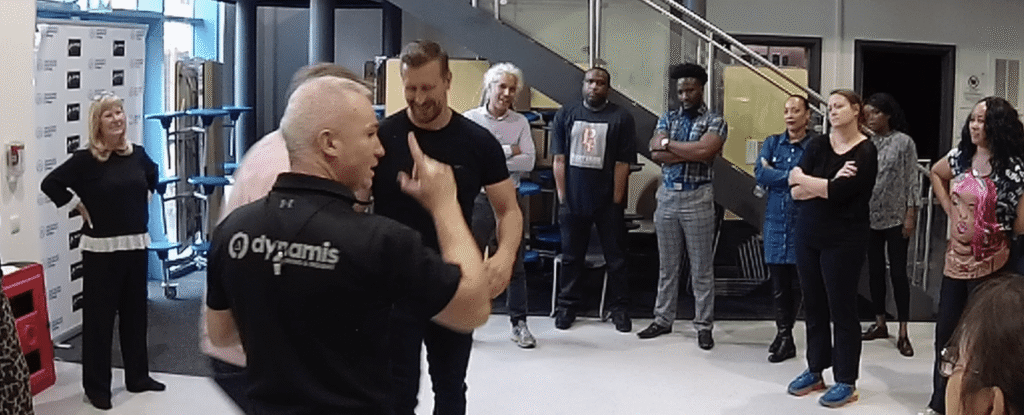
De-Escalation and Physical Intervention in a Secondary Environment When a member of education staff makes a decision about physically intervening in a ‘physical behaviour’ situation, it is possibly the most critical moment in their career. The forseeable results of a poorly managed physical intervention at your secondary school or college could be: – a child […]
Non-Escalation and De-escalation Training at Trainer-level for Schools
We are delighted to announce that Vistelar Conflict Management Train-the-Trainer will be coming to the UK in December this year! This five-day conflict management trainer course certifies individuals as instructors for Vistelar’s Conflict Management for Contact Professionals training programme, so they are authorised to teach this program within their organization. This conflict management trainer course covers important aspects […]
SEN Classroom Management – because you have a respectful language, the community is safer to work in
“Hi, my name is Katie Dill, and I am a special education teacher from Winnebago School District in Northern Illinois. I chose Vistelar as a teacher in the educational field because this is “how we do things”. In the professional field we know that we often get told we just have to respond. We have […]